

No-Fault Divorce: The 2026 Shift
The idea behind no-fault divorce is surprisingly simple: you don’t need to prove your spouse did something "wrong’ to end the marriage. It’s a shift from the old days, where you had to demonstrate adultery, abuse, or abandonment to get divorced. Instead, you can cite ‘irreconcilable differences’ – essentially, you’ve grown apart. This concept started gaining traction in the 1970s and has become increasingly common, though it"s far from universal.
Divorce laws continue to evolve, with states making adjustments to their procedures in 2026. Some states are easing access to no-fault divorce, while others are reinforcing traditional requirements. These changes directly affect your rights and the divorce process.
The debate around no-fault divorce balances individual autonomy with concerns about fairness and family impact. Advocates say it reduces conflict and allows people to move on faster. Opponents worry it can disadvantage economically vulnerable spouses or undermine marriage. This debate drives the updates we see nationwide.
Florida's Updates: A Closer Look
Florida is a focal point for no-fault divorce discussions, and 2026 brings changes. As of early this year, Florida remains a no-fault state, meaning you don’t need to prove marital misconduct to get a divorce. However, the specifics of how that works are being clarified and tightened.
The key phrase is "irreconcilable differences.’ Simply saying you have them isn’t enough; you"ll need to demonstrate the marriage is irretrievably broken. According to floridadivorce.law and soflofamilylaw.com, Florida requires a couple to be separated for at least six months before a no-fault divorce can be finalized. This is a waiting period to be aware of.
Before 2026, ambiguity existed about whether a short separation could satisfy this requirement. Recent clarifications aim to provide more certainty, impacting divorce timelines; you can’t simply file and expect a quick resolution. The six-month separation serves as a cooling-off period, intended to encourage reconciliation or a more considered decision.
What does "separation’ mean here? It"s not just living in different rooms. It generally requires living separate and apart, with no marital relations. Documenting this separation—through separate accounts, addresses, and communication patterns—is vital if you anticipate disputes.
States Expanding No-Fault Options
Several states are moving towards more accessible no-fault divorce procedures in 2026. Connecticut, for example, has reduced the waiting period required for a no-fault divorce from twelve months to ninety days, making the process significantly faster for couples who agree on the terms of their separation.
New York is discussing streamlining its no-fault divorce process. Currently, New York requires a six-month separation or a finding of irreconcilable differences. Proposals aim to shorten this timeframe and simplify filing requirements, but these are still in the legislative process with an uncertain outcome.
Illinois broadened the definition of "irreconcilable differences" to include marital breakdowns, even without a formal separation. This gives more couples the option of pursuing a no-fault divorce without needing to live apart first.
Information on these changes is still developing. State laws are constantly in flux, and proposals may not become law. These examples illustrate a trend toward greater flexibility in no-fault divorce procedures. Always check your state's current laws with a qualified attorney.
- Connecticut: Reduced waiting period to 90 days.
- Illinois: Broadened definition of 'irreconcilable differences'.
- New York: Considering streamlining filing requirements.
No-Fault Divorce Law Updates - 2026
| State | Previous Divorce Law (Briefly) | 2026 Changes | Impact on Filing Process |
|---|---|---|---|
| Florida | Required a 15-day waiting period after filing and completion of mandatory financial disclosures. | The 2026 updates streamline the financial disclosure process, allowing for phased submissions and potentially reducing the initial waiting period if disclosures are substantially complete. | Moderate - Streamlined disclosures may ease the process, but waiting periods remain a factor. |
| Illinois | Grounds for divorce included irreconcilable differences, but required a separation period in some cases. | Legislation passed in 2026 eliminates mandatory separation periods for all divorce cases based on irreconcilable differences. | Easy - Removing the separation period simplifies filing for many couples. |
| Maryland | Required a 12-month separation before a mutual consent divorce could be granted. | Maryland's 2026 changes reduce the required separation period for mutual consent divorce to six months. | Moderate - Shortened separation period provides a faster path to divorce for agreeing couples. |
| Arizona | Required proving irreconcilable differences with specific elements. | Updates in 2026 clarify the definition of 'irreconcilable differences' and reduce the evidentiary burden for proving them. | Easy - Clarified grounds should lead to a more straightforward filing process. |
| Colorado | Required grounds like adultery or cruelty, or irreconcilable differences after a separation period. | Colorado's 2026 amendments focus on simplifying the process for dividing property in no-fault divorces, particularly regarding retirement accounts. | Moderate - Changes primarily affect the division of assets, not initial filing, so impact is moderate. |
| Washington | Required a showing of irretrievable breakdown of the marriage. | Updates in 2026 address the handling of digital assets in divorce proceedings, requiring disclosure and equitable distribution. | Moderate - New requirements for digital asset disclosure add a layer of complexity. |
Illustrative comparison based on the article research brief. Verify current pricing, limits, and product details in the official docs before relying on it.
States Tightening Restrictions
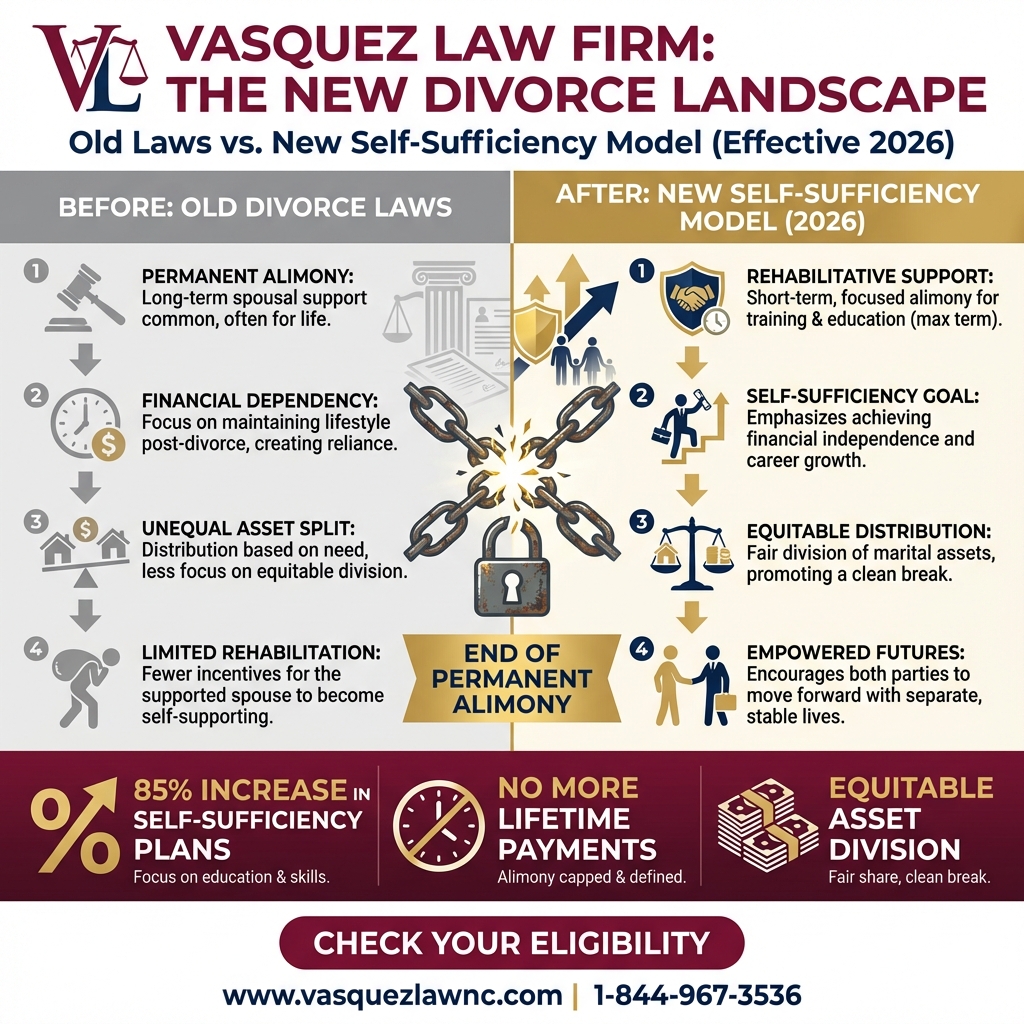
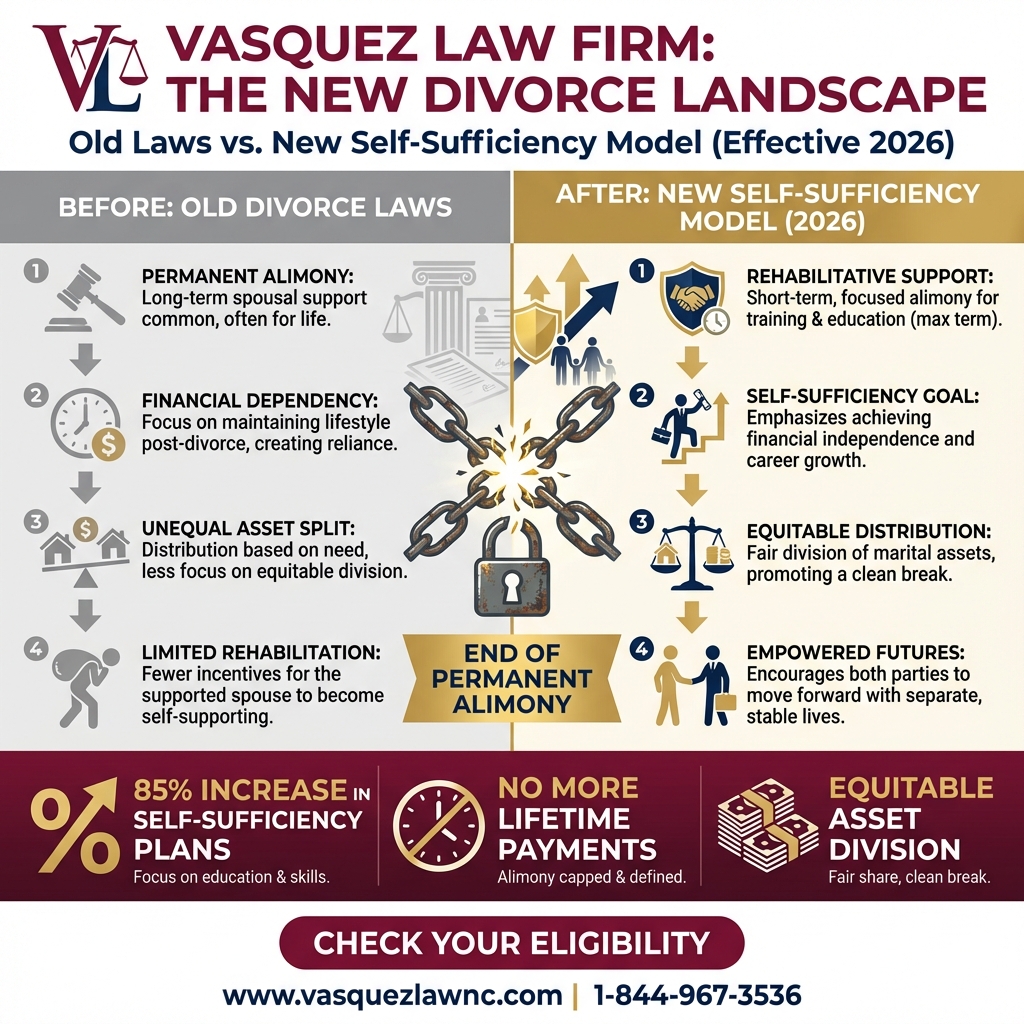
While many states are easing access to no-fault divorce, others are taking a more cautious approach. North Carolina, for instance, has seen renewed debate about reinstating some requirements for proving marital misconduct in certain cases. While no-fault divorce remains available, legislators are considering adding additional safeguards for economically disadvantaged spouses.
Texas maintains a strict approach, requiring a separation period or proof of fault-based grounds for divorce. There hasn’t been significant movement toward expanding no-fault options in 2026, reflecting a conservative stance on divorce law.
Wisconsin introduced a 30-day "cooling-off" period after filing for a no-fault divorce, even if both parties agree on all terms. This provides a final opportunity for reconciliation, though it adds an extra step.
These restrictions stem from concerns about fairness and the potential for one spouse to be disadvantaged in asset division or spousal support. No-fault divorce isn’t universally accepted, and valid arguments exist on both sides.
Impact on Property Division
No-fault divorce aims for a "clean break’—a fair and equitable division of assets without assigning blame. Many states aim for an approximately 50/50 split of marital property, regardless of who ‘caused’ the divorce. However, this isn"t a hard and fast rule, and specifics vary considerably by state.
No-fault divorce doesn’t automatically guarantee an equal split. Factors like contributions to the marriage (financial and non-financial), earning potential, and marriage length are still considered. A spouse who significantly contributed to the other’s career advancement, for example, might receive a larger share of assets.
Alimony or spousal support awards are also affected. Fault isn’t necessarily a primary factor in awarding alimony in no-fault states, but it can be considered in some circumstances. For example, if one spouse’s misconduct significantly impacted the other’s earning capacity, it could influence the amount and duration of alimony.
No-fault divorce prioritizes a practical, efficient resolution, focusing on the economic realities of separation rather than assigning moral blame. The goal is to allow both parties to move forward financially.
- Equitable Distribution: Most states aim for a fair, but not always equal, division of assets.
- Factors Considered: Contributions to the marriage, earning potential, and length of marriage.
- Alimony: Fault may be a secondary consideration in spousal support awards.
Navigating a Narcissist in a No-Fault System
No-fault divorce is challenging when dealing with a spouse who exhibits narcissistic traits. Narcissists often thrive on control and conflict, and they may exploit the no-fault system to manipulate the process. Be prepared and protect your interests.
A common tactic is creating unnecessary delays and disputes. They may change their story, file frivolous motions, or refuse to cooperate with discovery. Document everything—emails, texts, phone calls—and maintain a clear record of all interactions. This documentation can be invaluable in court.
Seek guidance from an attorney experienced in high-conflict divorces involving narcissistic personalities. They can help you navigate legal complexities and anticipate your spouse’s tactics. A therapist can also provide emotional support and help you establish healthy boundaries.
The goal isn’t to "win" against a narcissist, but to protect yourself and achieve a fair outcome. Focus on your needs and prioritize your well-being. Don't get drawn into their games. It’s a difficult situation, but with careful planning and professional support, you can navigate it successfully.
Understanding Filing Fees and Costs
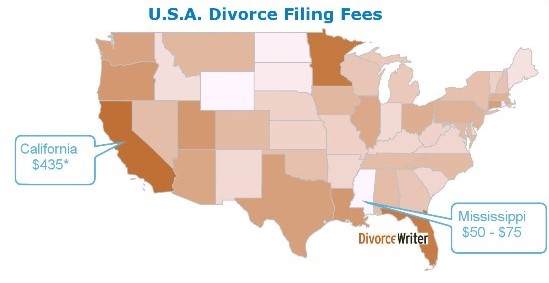
The cost of a no-fault divorce varies significantly by state, case complexity, and whether you hire an attorney. Filing fees alone range from around $100 to $400, but court costs, such as fees for serving papers and attending hearings, can add several hundred dollars more.
Attorney fees are the most significant expense. A simple, uncontested divorce might cost $1,500 to $3,000 for an attorney to review paperwork and provide limited advice. A contested divorce with complex asset division or child custody issues can easily cost $10,000 to $50,000 or more.
Some states offer fee waivers for low-income individuals. Legal aid organizations can also provide free or low-cost legal assistance. It’s worth exploring these options if you’re concerned about the cost of divorce.
Remember that these are just estimates. The actual cost of your divorce will depend on your specific circumstances. It’s important to discuss fees upfront with any attorney you’re considering hiring.
Resources for Further Help
Navigating a divorce can be overwhelming. Here are some resources to help you understand your rights and find support. Your state’s court website will have information on divorce procedures and filing requirements. Legal aid organizations offer free or low-cost legal assistance to those who qualify.
Divorce support groups can provide emotional support and connect you with others going through similar experiences. The American Academy of Matrimonial Lawyers () has a directory of qualified divorce attorneys.
No comments yet. Be the first to share your thoughts!