

Divorce Costs: A State-by-State Snapshot
Divorce costs in the United States are notoriously variable. It’s not simply a matter of paying a flat fee; the final tally depends on a huge number of factors. These include whether you pursue a no-fault or fault-based divorce, the complexity of your assets, the presence of children, and the level of agreement (or disagreement) with your spouse. No-fault divorces, now available in every state, generally tend to be less expensive because they avoid the need to prove wrongdoing – which can involve lengthy investigations and court battles.
Estimating divorce costs for 2026 is an exercise in informed speculation. Legal fees are always subject to change, and economic conditions can play a role. However, based on current trends and anticipated adjustments for inflation, we can provide a reasonable overview of what to expect. It's important to remember these are estimates, and your individual situation could significantly alter the final amount.
The range is truly staggering. A simple, uncontested divorce might cost a few hundred dollars, while a highly contested divorce with significant assets could easily exceed $50,000, or even much more. Location matters immensely; attorney rates vary dramatically from state to state, and even within states, depending on the lawyer’s experience and the local cost of living. Don’t assume costs are uniform across the country.

Filing Fees: What Courts Charge
Court filing fees are the initial cost of starting a divorce proceeding. These fees are set by each state’s court system and cover the administrative expenses of processing the case. While these fees are generally the least expensive part of a divorce, they can still add up, especially if you need to file multiple motions or requests. They are typically non-refundable, even if you ultimately decide to reconcile or dismiss the case.
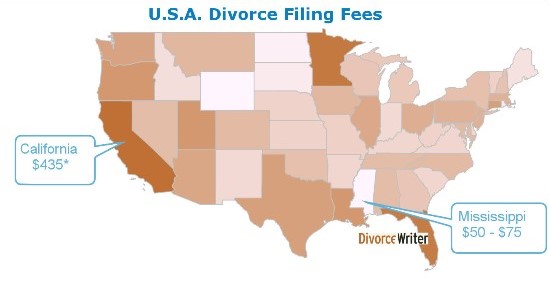
Here's a snapshot of filing fees (as of late 2025, anticipating 2026 adjustments) in several states. Keep in mind these are subject to change, so always verify with the relevant court before filing:
To illustrate, in North Carolina, as of November 2025, the initial filing fee is $225 (nccourts.gov). In Texas, filing fees can range from $250 to $300 depending on the county (jimohlaw.com). California’s filing fee is around $435 (as of late 2025). Florida’s filing fees vary by county but often fall between $400 and $500. New York’s filing fee is approximately $335. Pennsylvania’s fees are around $215. Illinois charges approximately $315. Ohio’s initial filing fee is $235. Georgia’s fees are around $280. Michigan’s filing fee is approximately $185. Arizona’s fees hover around $299. Colorado’s initial filing fee is $230. Massachusetts charges around $200. Virginia’s fees are approximately $175 and Washington State’s are around $400. These numbers reflect only the initial filing; additional fees for serving papers or filing motions are separate.
2026 Estimated Divorce Filing Costs by State
| State | Initial Filing Fee | Service of Process Fee | Other Common Court Fees | Last Updated |
|---|---|---|---|---|
| North Carolina | Approximately $225 | Approximately $30 per defendant | Fees may apply for summons, transcripts, and e-filing. Costs vary by county. | October 26, 2023 |
| Texas | Ranges from $200 - $300 (depending on county) | Approximately $80 - $120 per defendant | Additional fees for vital statistics records and potential court reporter costs. | October 26, 2023 |
| California | Approximately $435 - $460 | Approximately $30 - $60 per defendant | May include fees for publication of summons if service by personal delivery fails. | October 26, 2023 |
| Florida | Approximately $400 | Approximately $40 per defendant | Fees for electronic filing and potential recording of documents may apply. | October 26, 2023 |
| New York | Approximately $335 | Approximately $45 per defendant | Additional fees for index numbers and filing motions. | October 26, 2023 |
| Illinois | Approximately $295 - $315 | Approximately $30 per defendant | Fees may be required for summons issuance and document copying. | October 26, 2023 |
Illustrative comparison based on the article research brief. Verify current pricing, limits, and product details in the official docs before relying on it.
Attorney Fees: The Biggest Expense
Attorney fees almost always represent the largest portion of total divorce costs. The way attorneys charge can vary significantly. Some charge an hourly rate, which can range from $200 to $600 or more per hour, depending on their experience, location, and the complexity of the case. Others offer a flat fee for specific services, such as an uncontested divorce or a simple property settlement. Still others may require a retainer – an upfront payment that is then applied to their hourly fees as they work on your case.
The complexity of your divorce is the biggest driver of attorney fees. A straightforward, uncontested divorce with no children and minimal assets will naturally cost less than a contested divorce involving child custody disputes, significant property division (including businesses or retirement accounts), or allegations of marital misconduct. Valuing a business or tracing assets can add substantial costs, often requiring the expertise of forensic accountants or business valuation experts.
According to data from Jimoh Law (May 4, 2025), a Texas divorce can cost between $300 for a simple uncontested case and over $45,000 for a complex, litigated divorce. This range highlights the enormous potential variability. Mediation and collaborative divorce are often presented as cost-saving alternatives. Mediation typically costs between $500 and $5,000, depending on the length and complexity of the sessions. Collaborative divorce, which involves attorneys trained in collaborative law techniques, can range from $10,000 to $30,000, but may be less expensive than a full-blown court battle.
Attorney rates also vary widely by state. Major metropolitan areas like New York City and Los Angeles will generally have higher attorney fees than smaller cities or rural areas. Experience also plays a role; a seasoned attorney with a strong track record will typically charge more than a newly licensed attorney. It’s crucial to discuss fees upfront and get a clear understanding of how the attorney bills their time.
Hidden Divorce Costs: Don't Forget These
Beyond the obvious filing and attorney fees, several other costs can creep into a divorce, often unexpectedly. These 'hidden' costs can significantly increase the overall expense. It's essential to be aware of these potential expenses and factor them into your budget.
Appraisals are frequently necessary to determine the value of assets like real estate or personal property. A real estate appraisal can cost between $300 and $600, while appraisals for valuable items like jewelry or art can also add up. If there's a suspicion of hidden assets, a forensic accountant may be needed to trace financial transactions and uncover undisclosed income – these services can be very expensive, potentially costing several thousand dollars.
In cases involving children, a child evaluation may be ordered by the court to assess the child’s best interests. These evaluations can cost $1,000 or more. Expert witness fees can also be substantial, particularly if you need testimony from a vocational expert, medical professional, or other specialist. These costs can quickly add up, so it's important to discuss them with your attorney and understand their potential impact on your overall expenses.
- Real Estate Appraisal: $300 - $600
- Forensic Accounting: $2,000+
- Child Evaluation: $1,000+
Potential Divorce Costs
- Court Filing Fees - These vary significantly by county and state, typically ranging from $100 to $400, but can be higher in some jurisdictions.
- Attorney Retainer Fees - Most attorneys require an upfront retainer, often ranging from $2,500 to $10,000 or more, depending on the lawyer's experience and location.
- Property Appraisals - If significant assets like real estate are involved, a professional appraisal (typically $300 - $600 per appraisal) may be necessary to determine fair market value.
- Forensic Accounting - In cases involving complex finances or suspicion of hidden assets, a forensic accountant (hourly rates $200 - $500+) can trace funds.
- Child Custody Evaluations - A psychologist or other professional may be appointed to evaluate the family and make recommendations regarding custody, costing $1,500 - $5,000 or more.
- Expert Witness Fees - If expert testimony is required (e.g., vocational experts, medical professionals), fees can range from $500 to several thousand dollars per expert.
- Credit Counseling - Some states *may* require completion of a credit counseling course, with fees around $50 - $200.
High-Conflict Divorces: Expect to Pay More
Divorces characterized by significant conflict – disagreements over child custody, property division, or allegations of misconduct – are almost always more expensive. Litigation, the process of resolving disputes in court, is a major cost driver. Each court hearing, motion, and deposition adds to the attorney’s billable hours.
Discovery, the process of gathering information from the other party, can also be costly. This may involve requests for documents, interrogatories (written questions), and depositions (oral examinations under oath). These processes can be time-consuming and require significant attorney involvement. The more contentious the divorce, the more extensive the discovery process is likely to be.
High-conflict divorces can be financially devastating. The emotional toll is also significant, and the prolonged legal battle can create lasting stress and anxiety. It's crucial to explore alternative dispute resolution methods, such as mediation or collaborative divorce, to try to resolve issues amicably and minimize costs.
State Cost Standouts: Expensive vs. Affordable
Certain states consistently appear as more expensive for divorce than others. California, for example, is often cited as one of the most expensive states, due to its complex property laws and high attorney rates. The state’s community property rules, which require an equal division of assets acquired during the marriage, can lead to lengthy and costly disputes. New York is also generally expensive, particularly in New York City, where attorney fees are very high.
Illinois and Washington State also tend to be on the pricier side. These states have complex divorce laws and a high cost of living, which contributes to higher legal fees. Conversely, some states are relatively more affordable. States in the South, such as Alabama, Mississippi, and Arkansas, generally have lower attorney fees and simpler divorce procedures.
Nevada can also be a more affordable option, particularly if the divorce is uncontested. However, it’s important to note that even in more affordable states, costs can escalate quickly if the divorce becomes contested. The specific laws regarding property division and alimony also play a role; states with more generous alimony provisions may see longer and more expensive divorces.
Reducing Divorce Costs: Practical Tips
Minimizing divorce costs requires proactive planning and a willingness to compromise. Mediation and collaborative divorce are excellent options for resolving disputes amicably and avoiding the expense of litigation. Gathering all relevant financial documents – bank statements, tax returns, property deeds, retirement account statements – before meeting with an attorney can save you significant time and money.
Being organized and responsive to your attorney’s requests is also crucial. Delays caused by missing documents or unanswered questions can add to your legal fees. Choosing an attorney wisely is perhaps the most important step. Look for an attorney who is experienced in divorce law, has a good reputation, and is a good fit for your personality and communication style.
Consider handling some tasks yourself, such as drafting simple correspondence or organizing documents. However, be cautious about attempting to navigate the legal process without professional guidance, as mistakes can be costly. Finally, try to maintain a respectful and cooperative attitude throughout the divorce process. Avoiding unnecessary conflict can save you money and emotional distress.


No comments yet. Be the first to share your thoughts!